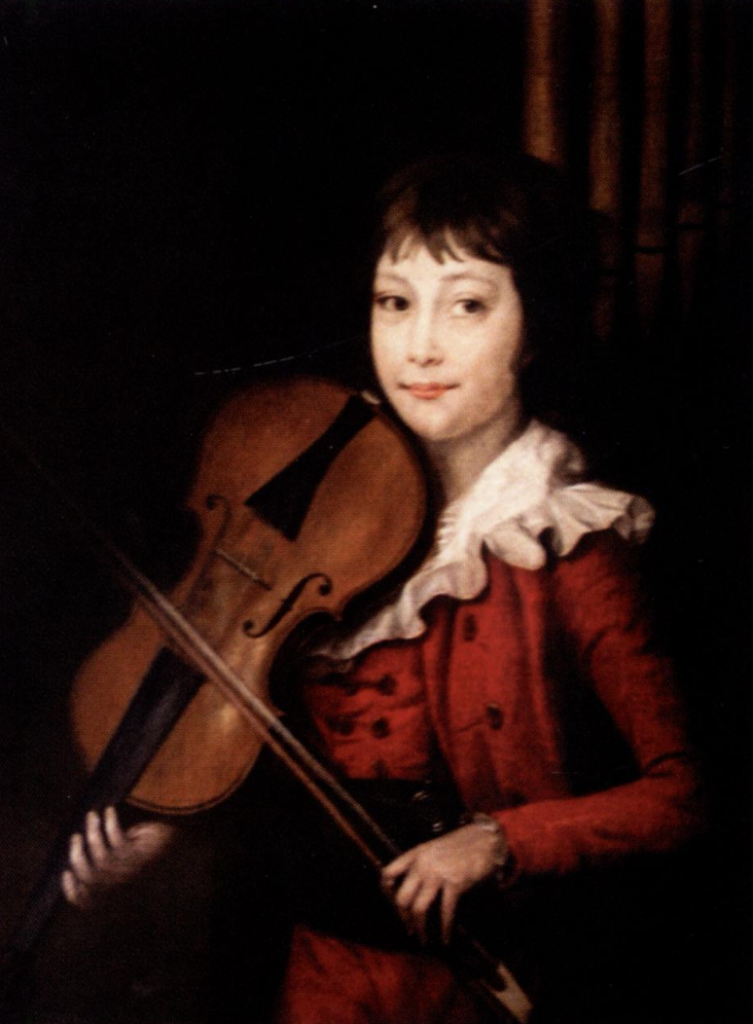
Location: Charles Wesley’s House, Bristol, England
Date: 1771
Medium: Pastel
Samuel Wesley (1766–1837) was a prominent English organist and composer of the late Georgian period. Born in Bristol on 24 February 1766, he possessed an illustrious musical and religious heritage. He was the son of the famed Methodist hymnodist Charles Wesley, nephew of Methodist Church founder John Wesley, and grandfather to composer Samuel Sebastian Wesley.
Recognized as a child prodigy by the British musical establishment alongside his elder brother, Charles, Samuel quickly mastered the violin, harpsichord, and organ. By age eight, his remarkable talent for composition and improvisation prompted Dr. William Boyce to dub him “the English Mozart,” a title reflecting his natural mastery of complex musical structures, such as his early oratorio, Ruth.
As an adult, Wesley worked as a teacher, lecturer, conductor, and pioneer of the British organ recital—a novel concept at a time when instrumental entertainment was deemed inappropriate for church spaces. His eclectic compositional style bridged late Baroque, Classical, and early Romantic influences. Though much of his extensive catalog exists only in manuscript form or remains rare, he composed famous church works like the motet In exitu Israel. Crucially, Wesley is also credited with introducing and championing the music of J.S. Bach in England.
His personal life was marked by independent choices; in 1784, he privately converted to Roman Catholicism to the dismay of his uncle John. Although he returned to Anglicanism a few years later, he maintained a lifelong appreciation for Catholic sacred music. In 1788, Wesley was initiated into Freemasonry in the Lodge of Antiquity, eventually serving as the first Grand Organist of the United Grand Lodge of England from 1812 to 1818. He died at age 71 and was buried at St Marylebone Parish Church in London.